Japan Rail Pass Cost Model
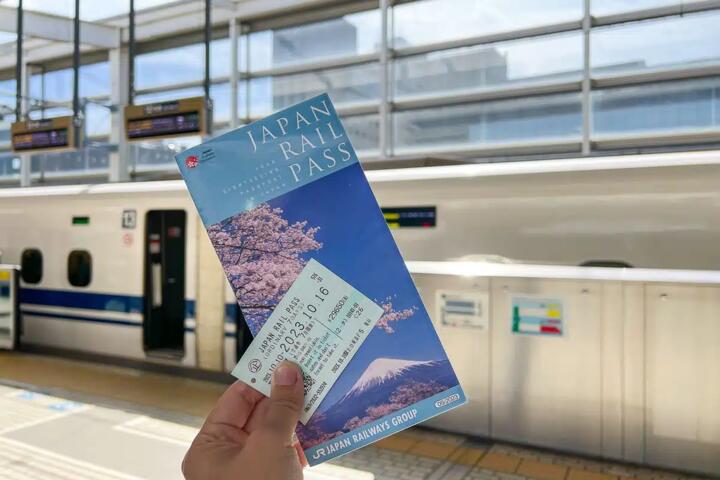
The Japan Rail Pass (JR Pass) is a fixed-price rail travel product that covers many Japan Railways (JR) trains, including most Shinkansen services operated by JR. Individual tickets price each trip segment by distance, train type, and seat class, so the total depends on how you move between cities and how often you ride long-distance routes.
For 2026 planning, the key question becomes whether your itinerary’s JR-covered mileage and seat needs exceed the pass price after you account for trains the pass does not cover or the fares you would otherwise pay. A practical example: a Tokyo–Kyoto–Osaka plan uses multiple Shinkansen rides; the pass may cover those rides, while point-to-point tickets price each leg separately. If your plan includes many short local rides on non-JR lines, the pass can look less efficient because those rides still require separate tickets.
Pricing changes matter. The JR Pass has had multiple price revisions and rule changes over time, and the 2026 figure depends on the official sales terms in effect when you buy. You can still model the decision without guessing by using the current official pass price and current fare calculators for individual tickets, then updating once 2026 pricing is published.
Common Miscalculations
Most cost errors come from mixing assumptions about coverage and train types. The JR Pass covers many JR lines, but it does not cover every operator or every service pattern, and some routes require separate tickets even when they look “rail-like” on a map.
People also miscount the number of long rides. A pass decision usually hinges on a small set of Shinkansen and limited express segments. If you count only the headline cities (Tokyo, Kyoto, Osaka) but forget intermediate legs (for example, Kyoto to Hiroshima via a Shinkansen transfer), the model underestimates ticket totals.
Another dependency is seat class and reservation behavior. The pass has options for reserved seating and non-reserved seating, and individual tickets can be purchased with reserved seats too. If you plan to reserve seats for most long legs, your point-to-point cost rises; if you accept non-reserved seating on busy Shinkansen, your ticket cost may stay lower.
Finally, route planning tools can mislead. Some route planners show a “fastest” path that uses a mix of JR and non-JR segments; the pass covers only the JR parts. When you model, you need a segment list you can map to JR coverage, not just a single travel time estimate.
Side observation: I often see spreadsheets that treat every ride as “Shinkansen fare,” even when the itinerary includes a limited express or a local connector. That shortcut makes the break-even math look cleaner than it is.
How To Compare Costs
Start with a segment list for your itinerary. Break each day into train legs between stations, then label each leg by operator and service type (Shinkansen, limited express, local). Next, compute two totals: (1) the JR Pass cost for the duration you need, and (2) the sum of individual fares for the legs you would buy as separate tickets.
Then run a break-even check. If your individual-ticket total for JR-covered long legs exceeds the pass price, the pass can be cheaper for that seat class and duration. If it falls short, point-to-point tickets usually win, especially when your itinerary includes many non-JR rides or fewer long-distance legs.
Side observation: route planning in Google Maps can show a single itinerary, but it rarely gives you the fare breakdown you need for a pass model. A fare calculator that outputs base fare and limited express/surcharge components is more useful for this specific decision.
Build A Segment List
Write down each station-to-station leg you expect to take, including intermediate stops that change train lines. For example, “Tokyo to Kyoto” is one leg; “Kyoto to Hiroshima” is another leg even if the route includes a transfer. If you plan to ride a Shinkansen to a hub and then a limited express to a smaller city, treat those as separate legs.
Tools that help: HyperDia is no longer the common recommendation, but many travelers use official or reputable route planners that show train names and operators. For fare modeling, you want the train type and whether it is JR-operated. If you cannot identify the operator for a leg, the model becomes guesswork, and you should refine the route until the operator is clear.
Realistic outcome: a careful segment list usually changes the number of “JR-covered long legs” by at least one or two compared with a city-only count, which is enough to flip the break-even result.
Price Individual Tickets
For each leg, price the fare for the seat class you plan to use. Individual tickets typically include a base fare plus a limited express or Shinkansen surcharge, and reserved seating may add a reservation fee depending on the product. Use a fare calculator that matches the train type and seat class, then sum the legs.
Practical method: create a table with columns for leg, train type, seat class, and the fare you get from the calculator. If you plan to travel on multiple days, keep the fare assumptions consistent across days so you do not mix “reserved” and “non-reserved” pricing.
Side observation: when you switch from “non-reserved” to “reserved” for Shinkansen, the surcharge difference is often smaller than travelers expect, but it still matters when you multiply it across several long legs.
Model Pass Duration And Coverage
JR Pass pricing is tied to the number of consecutive days you buy. Choose the shortest duration that covers your long-distance travel days, then check whether you will use the pass on most of those days. If your itinerary has a long gap with no JR travel, a shorter duration can reduce cost even if it means you must buy a separate ticket for a late leg.
Coverage check: confirm that each leg you plan to take is JR-operated and falls within the pass rules. Some routes that look like “JR trains” on a map may involve non-JR segments or require separate tickets for specific services. If a leg is not covered, price it as an individual ticket and add it to the point-to-point total.
Realistic outcome: for many itineraries, the pass decision is driven by 3–6 long legs. If 1–2 legs are not covered, the pass can lose its advantage quickly.
Account For Timing And Reservations
Pass holders can ride many trains without reserving seats, but seat availability changes by season and day of week. If you travel during peak periods, you may need reservations for comfort, which affects how you compare against point-to-point tickets that also offer reserved seating.
Practical approach: decide your seat preference first. If you want reserved seats for most long legs, price individual tickets with reserved seating and compare against the pass option that includes reserved seating. If you are comfortable with non-reserved seating and you travel off-peak, your individual-ticket total may stay lower.
Side observation: even when the pass covers a train, the reservation process can add friction. People who hate planning often end up paying for flexibility through extra tickets anyway, which changes the math.
Case Examples
Example 1: Tokyo–Kyoto–Hiroshima (7 days)
Scenario: A traveler spends 3 days in Tokyo, 2 days in Kyoto, and 2 days in Hiroshima. Long legs are Tokyo→Kyoto (Shinkansen), Kyoto→Hiroshima (Shinkansen), and Hiroshima→Tokyo (Shinkansen). They also take local trains within cities that may include non-JR lines.
Model outcome logic: the pass covers the three JR Shinkansen legs if they match JR-operated services. Point-to-point tickets price each leg separately, and the pass becomes more likely to win if the sum of those three Shinkansen fares exceeds the pass price for the chosen duration. Local rides usually do not swing the decision because both approaches require separate tickets for non-JR segments.
Example 2: Tokyo + Osaka day trips (5 days)
Scenario: A traveler stays in the Tokyo area for most of the trip, takes one Shinkansen to Osaka for 1–2 days, and returns once. They also ride regional trains that include non-JR lines for day trips.
Model outcome logic: with only two long Shinkansen legs, point-to-point tickets often remain competitive because the pass price is fixed while the covered mileage is limited. If the traveler adds an extra long leg (for example, Osaka→Fukuoka or Osaka→Sapporo), the pass can regain advantage, but the decision hinges on those additional long segments rather than the number of days in Japan.
Comparison Checklist
| Decision Input | JR Pass Model | Point-To-Point Model | What To Check |
|---|---|---|---|
| Long legs count | 3–6 legs often decide the result | Each leg adds cost | List every station-to-station ride |
| JR coverage | Covers JR-operated services only | Works for any operator you ticket | Confirm operator for each leg |
| Seat class | Reserved vs non-reserved option | Reserved seating priced per leg | Match seat assumptions across both totals |
| Duration | Consecutive days price | No duration bundle | Pick the shortest pass window that covers long legs |
Step-by-step checklist you can run in a spreadsheet:
- Choose your travel dates and decide the seat preference (reserved or non-reserved).
- List every station-to-station leg for long-distance travel.
- Mark each leg as JR-covered or not covered based on operator/service type.
- Sum individual fares for all legs you would buy separately, using the same seat class.
- Compute the JR Pass cost for the shortest consecutive-day option that covers your JR-covered long legs.
- Compare totals and note which legs drive the difference.
Common Mistakes
One frequent mistake is using a “distance-only” intuition. Shinkansen and limited express pricing includes surcharges that do not scale linearly with distance in the way people expect, so a quick guess based on kilometers often misstates the break-even point.
Another mistake is assuming that every train between two famous cities is covered. Some routes use non-JR segments or involve services with different ticketing rules. If you do not verify coverage per leg, you end up comparing a pass price to an incomplete ticket total.
People also forget to align seat assumptions. Comparing a reserved-seat pass option against non-reserved point-to-point tickets can make the pass look better than it is, or the reverse if you compare non-reserved pass against reserved tickets.
Finally, travelers sometimes model only the “big rides” and ignore the last-mile connectors. A short connector leg that is not covered by the pass can add enough cost to matter when your itinerary is near the break-even line.
Side observation: I once saw a plan where the pass was chosen because the spreadsheet counted a single “Tokyo to Kyoto” ride, but the actual itinerary included a day trip that required an extra long leg. The pass duration stayed the same, so the extra leg pushed the total further away from the pass’s break-even threshold.
FAQ
What does the JR Pass cover in 2026?
Coverage depends on the official JR Pass rules in effect when you buy, including which JR-operated services are included and which seat/reservation options apply. For any leg in your itinerary, verify the operator and service type before you treat it as covered.
How do I calculate the break-even point?
Sum individual fares for each station-to-station long leg using the same seat class you plan to use. Compare that total to the JR Pass price for the consecutive-day window that covers your long legs, then adjust for any legs not covered by the pass.
Do local city trains change the decision?
Usually they do not swing the result unless your plan includes many JR-operated local rides that you would otherwise ticket. The pass decision typically depends on a small number of long-distance Shinkansen or limited express legs.
Should I price reserved or non-reserved?
Price the option that matches your travel behavior. If you expect to reserve seats for most long legs, use reserved pricing for point-to-point tickets and the corresponding pass option; if you travel off-peak and accept non-reserved seating, model non-reserved.
Where can I verify fares and coverage?
Use official fare and route information sources for the train types you plan to ride, then cross-check with a route planner that shows train names and operators. If a leg’s operator is unclear, refine the route until you can classify it as JR-covered or not.
Author's Insight
A cost model for the JR Pass works best when it treats the itinerary as a list of ticketed legs, not as a set of destination cities. The break-even point is sensitive to coverage rules, seat class assumptions, and the number of long-distance rides, so the model should be built from verifiable segments.
Because 2026 pass pricing may change and coverage rules can be updated, readers should plug in the official 2026 pass price once published and use current fare calculators for point-to-point tickets. A spreadsheet that tracks each leg’s operator and seat class reduces the chance of “looks right” errors.
Side observation: I used a simple versioned checklist in a planning sheet labeled “v1.3” to prevent mixing reserved and non-reserved assumptions across legs, and it caught two mismatches in under five minutes.
Key Takeaways
- Model the decision from station-to-station legs and mark JR coverage per leg.
- Count long-distance Shinkansen/limited express rides; local rides rarely decide the outcome.
- Match seat class assumptions across both options before comparing totals.
- Pick the shortest consecutive-day pass window that covers your JR-covered long legs.
- Re-check coverage for any leg that uses mixed operators or non-JR connectors.