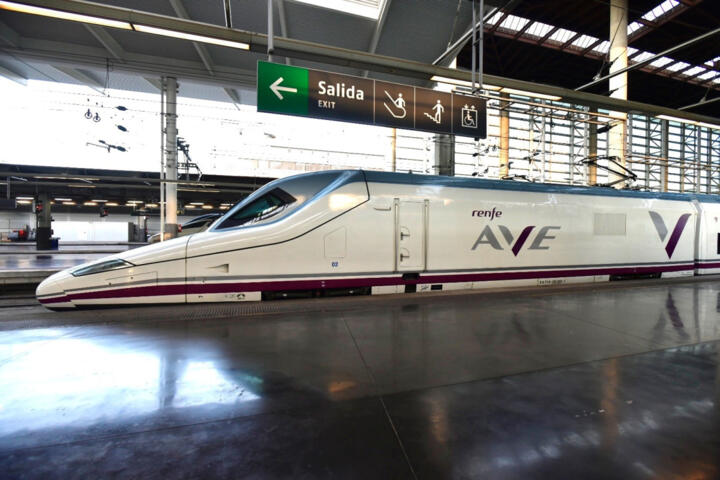
Spain AVE Vs Flights
Door-to-door cost compares the full trip from your origin address to your destination address, not the headline fare. For Spain, AVE often wins when you value predictable city-center to city-center travel, while flights can win when schedules align and baggage is minimal. The catch is that both options hide costs in different places: AVE hides them in seat class and reservation rules, while flights hide them in airport transfers, checked bags, and time buffers.
Example: Madrid to Barcelona. An AVE ticket might look cheaper than a flight, but the flight may avoid a long station walk, and the train may require a specific seat type for flexibility. Another example: Seville to Madrid. Train departures are frequent on main corridors, yet a flight’s total cost can rise quickly once you add a checked bag and a second transfer. If you price only the transport segment, you miss the part that usually decides the outcome: how much time you spend waiting and how much you pay to move between city and airport.
For planning, treat the trip as a set of cost drivers: (1) transport fare, (2) mandatory fees (seat selection, reservation, baggage), (3) ground transport (metro, taxi, bus), (4) time risk (missed connections, late arrivals), and (5) your own time value if you track it. That last item is personal, but even without a formal hourly rate, you can still compare by using a consistent buffer rule.
Main Cost Pain Points
People often compare an AVE “from” price to a flight “from” price and stop there. That fails because train fares vary by booking window and class, while flight fares vary by baggage and seat selection. A low flight fare frequently assumes a small cabin bag and no checked luggage, and the moment you add a bag the price curve changes.
Another common mistake is ignoring the station-to-city and airport-to-city transfer. AVE stations are usually in or near city centers, but airports are not. If you use a taxi, the cost can swing with time of day. If you use public transport, you trade money for time and risk missing a departure if the connection is tight. I’ve seen travelers arrive at an airport with enough time for boarding, then lose it to a transfer between terminals or a bag drop line that moves slower than the app predicts.
Time risk also matters. Flights include security and boarding windows that are not negotiable, and delays can cascade into missed connections. Trains have their own disruptions, but the “buffer” you need is often smaller when you start near the station and travel on a single direct service. Still, AVE can require a reservation and may have different ticket terms for changes and refunds, which affects the cost of uncertainty.
Supporting dependencies differ. For AVE, the key dependency is the train schedule and your ability to reach the station early enough for boarding and any ticket checks. For flights, the key dependencies are airline baggage rules, airport transfer time, and whether your itinerary includes a connection. If you’re comparing a direct flight to a direct train, you can keep the model clean; if one route has a connection and the other doesn’t, the comparison becomes a different problem.
How To Price Door-To-Door
Build A Cost Line-Item List
Start with a simple ledger for each option: transport fare, baggage fees, seat selection, and mandatory reservations. Then add ground transport from your address to the station or airport and from the arrival station/airport to your destination address. For ground transport, use a realistic mode: metro/bus fare plus one transfer, or a taxi estimate based on typical travel time. If you’re traveling with a family, count the number of adults and children separately because baggage and fare rules can differ.
For a quick check, price two scenarios: “carry-on only” and “one checked bag.” Many travelers discover that the carry-on scenario favors flights, while the checked-bag scenario narrows the gap or flips it. On the train side, seat class changes the fare more than people expect, and some tickets restrict changes. I once compared two AVE tickets where the cheaper one looked fine until I noticed the change terms; the “savings” vanished after a rebooking fee.
Use A Timing Buffer Rule
Pick one buffer rule and apply it to both options so you don’t cherry-pick. A practical approach: add a fixed “arrival before departure” buffer for each mode, then add transfer time between city and station/airport. For flights, security and boarding typically require more lead time than train boarding. For AVE, you still need time for station navigation and any ticket validation, but the buffer can be smaller if you depart from a nearby neighborhood.
Then model a worst-case day. For example, assume a delay that forces you to miss a connection on a flight itinerary, while the train itinerary stays on the same corridor. You don’t need exact probabilities; you need a consistent assumption so the comparison reflects risk. If you’re traveling for work with a fixed meeting time, the cost of missing it may dwarf the fare difference, and that changes the decision even when the “cheapest” option looks cheaper on paper.
Account For Baggage And Seats
Flights often charge for checked bags and sometimes for seat selection. AVE fares depend on class and sometimes on reservation rules, and the “cheapest” train ticket may limit flexibility. Compare the same passenger set: same baggage count, same seat needs (window/aisle), and same refund/change expectations. If you need to travel with bulky items, check whether they count as checked baggage or oversized cabin luggage, because the fee structure differs.
Use the airline’s and rail operator’s published baggage rules rather than assumptions from other countries. A cabin bag that fits in one airline’s policy can exceed another’s weight or dimensions. For trains, check whether your ticket includes a reserved seat and whether you can change it without a fee. These details rarely show up in a quick fare comparison widget, so you may need to open the fare rules page.
Convert Time Into A Consistent Value
If you track time value, convert both options into “total travel time plus buffer,” then apply the same hourly rate. If you don’t track it, use a simpler proxy: treat each extra hour of travel risk as a fixed cost you’re willing to pay. This keeps the comparison honest when one option is cheaper but requires more transfers or longer airport time.
One practical method: set a threshold such as “I won’t pay more than X euros for under an hour less travel time.” That turns the decision into a measurable trade-off. It also prevents a common failure mode where travelers accept a longer itinerary because the headline fare looks low, then spend the day dealing with transfers and lines.
Educational Case Examples
Madrid To Barcelona With One Checked Bag
Scenario: Two adults travel from central Madrid to central Barcelona. They want a direct AVE and a direct flight. They plan to check one bag each. The flight fare looks lower at first, but the checked-bag fees and airport transfer costs raise the total. The AVE ticket includes reserved seating, and the station-to-city transfers are short. After adding ground transport and baggage, the AVE total is closer to the flight total, and the decision depends on the exact departure times and how much buffer each itinerary requires.
What to learn: the “checked bag” scenario changes the ranking more often than travelers expect. If you price only carry-on, you may choose the wrong option for your actual packing plan.
Seville To Madrid With Carry-On Only
Scenario: One traveler goes from Seville to Madrid with carry-on only and prefers a morning departure. The flight schedule aligns with a short airport transfer, and the fare includes a cabin bag. The AVE option is also available, but the cheapest train fare requires a specific departure time and has stricter change terms. When you add the airport transfer and security buffer, the flight total time becomes similar to the train, while the flight total cost stays lower because no checked baggage fees apply.
What to learn: when baggage is minimal and schedules align, flights can win on door-to-door cost even with airport friction. When baggage increases or connections appear, the balance shifts.
Door-To-Door Checklist
| Decision Input | AVE Typically | Flights Typically | How To Compare |
|---|---|---|---|
| Headline fare | Varies by class and booking window | Varies by baggage and seat rules | Match the same passenger and baggage assumptions |
| Baggage fees | Often included within ticket rules | Checked bags and some seats may cost extra | Price “carry-on only” and “checked bag” separately |
| City-to-terminal transfer | Station is often near city center | Airport is usually farther from center | Use a realistic mode and include one transfer if needed |
| Time buffer | Boarding time often simpler | Security and boarding windows are fixed | Apply the same “arrive early” rule to both options |
| Change and refund terms | Fare rules vary by ticket type | Fare class and ticket type drive penalties | Check rebooking fees before you buy |
Step-by-step checklist you can reuse: (1) Choose the exact route and date, (2) pick the same baggage plan for both options, (3) price ground transport using a mode you would actually take, (4) add a buffer for boarding and transfers, (5) compare totals, then (6) run a “missed connection” scenario if the flight includes a connection. If you’re using a fare comparison site, open the fare rules page anyway; the summary view often hides the fee triggers.
Common Mistakes That Skew Results
One mistake is mixing travel classes. Comparing an AVE “standard” ticket to a flight “flex” ticket makes the cost gap meaningless because the flexibility and penalties differ. Another mistake is ignoring baggage weight limits and oversize rules. A bag that counts as cabin luggage on one itinerary can trigger a checked-bag fee on another, especially when you travel with sports gear or instruments.
People also underestimate transfer time at airports. Even when the airport is served by rail or bus, the door-to-gate time includes walking, ticketing, and occasional crowding. I’ve watched travelers rely on a “short transfer” in an itinerary builder, then lose 20–30 minutes at a security line that didn’t match the app’s estimate. That kind of delay rarely changes the headline fare, but it changes the day.
Finally, travelers sometimes assume that a cheaper option stays cheaper if plans change. Train and flight change policies vary by fare type, and the cost of rebooking can erase the initial savings. If your schedule is uncertain, price the rebooking scenario before committing. It’s a small extra step that prevents the “why did this cost more later?” problem.
FAQ
Do AVE tickets include baggage?
Many AVE tickets allow luggage under the operator’s rules, but the exact limits depend on ticket type and carriage conditions. Check the fare rules and luggage policy for your specific service before booking.
How do I compare airport transfer costs fairly?
Pick one realistic mode for each direction (for example, metro plus one transfer, or a taxi estimate) and apply it to both options. Use the same origin and destination points so you’re not comparing different neighborhoods.
When do flights become more expensive than trains?
Flights often overtake trains when you add checked bags, pay for seat selection, or need extra time buffers that force earlier departures. The ranking also shifts when flight itineraries include connections.
What time buffer should I use for each option?
Use a consistent “arrive early” rule based on published boarding and security expectations for flights, and a smaller but real buffer for train boarding and station navigation. If you have a fixed meeting time, add extra margin for disruptions.
Can I model a worst-case day for both options?
Yes. Assume a delay that causes a missed connection on the flight itinerary if it includes connections, and assume the train remains on the same corridor. Compare the cost and time impact under those assumptions.
Author's Insight
Door-to-door cost comparisons work best when you treat the trip as a set of line items rather than a single fare. The biggest swing factors for Spain are usually baggage fees, city-to-terminal transfers, and the time buffer you need to protect a fixed arrival time. A practical spreadsheet with two scenarios—carry-on only and one checked bag—often reveals the true cost difference within minutes.
On the planning side, I recommend recording your assumptions in a note (for example, “taxi at 07:30,” “arrive 90 minutes early for flights,” and “one transfer on public transport”). That makes the comparison repeatable and reduces the chance you’re comparing different products under the same label.
Key Takeaways
- Compare door-to-door totals: fare plus baggage plus transfers plus a realistic buffer for boarding and station/airport friction.
- Price at least two baggage scenarios; checked bags often change the winner.
- Match flexibility terms before concluding one option is cheaper, since change and refund rules vary by ticket type.
- Use a consistent timing rule so you don’t undercount airport time or overcount train convenience.
- If your schedule is fixed, model a worst-case day; the cost of disruption can outweigh the fare gap.