Paris CDG And EES Basics
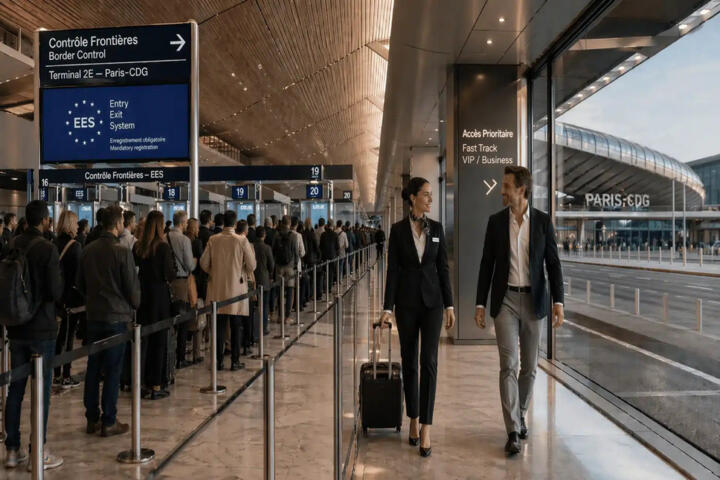
The EU Entry/Exit System (EES) records entry and exit data for travelers crossing the Schengen Area external borders. At airports such as Paris Charles de Gaulle (CDG), EES uses biometrics to identify travelers consistently across trips, then links that identity to the entry/exit record. For many passengers, the practical effect is a border-control step that may involve scanning travel documents and capturing biometric identifiers before you proceed to immigration clearance.
EES is not the same as passport stamping, and it is not the same as airline check-in. It sits at the border-control stage, so your timing depends on where you are in the airport process: check-in and bag drop happen earlier, while EES steps happen when you reach immigration. If you are transferring, the key question is whether your itinerary requires you to pass through immigration at CDG or stay within a transit area. That decision is driven by your ticket type, nationality, and the airport’s routing for your specific flight connection.
For a concrete example, a traveler arriving from outside the Schengen Area and connecting to another Schengen destination typically faces border-control procedures at the first arrival point. A traveler who remains in a secured transit zone may not. CDG signage and staff instructions matter here, and the airport can route passengers differently based on operational constraints.
Common Pain Points And Dependencies
People often plan for “immigration” as a single event, then discover that EES adds a biometric capture step that can take longer than a standard document check. Another frequent issue is assuming that a transfer always means “no border control.” Transfer passengers can still be required to complete immigration procedures if they enter the Schengen Area or if their connection requires re-screening that moves them out of the transit zone.
EES depends on several supporting systems. Your passport’s machine-readable zone must scan cleanly, and the biometric capture hardware must read your fingerprints reliably. If you have worn-down fingerprints, temporary injuries, or very dry skin, the capture step can fail and require re-capture or manual assistance. Staff may also need to verify identity when the system cannot match biometrics on the first attempt.
Another dependency is your document set. If you travel with multiple passports, name changes, or a passport issued after a previous trip, the border system may still work, but the staff workflow can take longer while they reconcile records. If your passport has damage that affects scanning, the process can slow down even if you are eligible for EES capture.
Finally, EES timing interacts with airport throughput. A busy bank of arrivals can create queues at the biometric stations, and the queue length can vary by time of day and by the number of staff assigned to assist with failed captures. On 2026-10-01, for example, CDG operations still vary by terminal and flight schedule, so relying on a single “typical” wait time is risky.
What To Do Before You Arrive
Check Your Transfer Status Early
Start by identifying whether your connection is treated as a transit stay within the airport’s secured area or as an entry into the Schengen Area. Your airline itinerary and airport instructions usually reflect this, but the most reliable signal is whether you are issued a boarding pass that keeps you in transit without immigration. If you have to collect baggage or pass through immigration, plan for EES capture.
If you have a mixed itinerary (for example, arriving on one ticket and departing on another), you may face different border-control steps than a single-ticket connection. Separate tickets often require you to clear more airport processes, and that can push you into immigration even when the layover looks short.
Prepare Documents For Fast Scans
Bring the passport you will use for travel, and make sure it is in good condition. Avoid covering the data page with stickers or laminations, since scanners can struggle with glare or altered surfaces. If you have a passport with a damaged machine-readable zone, consider replacing it before travel.
Also check that your name and date of birth match across your booking and travel documents. Border systems can still process mismatches, but staff may need extra verification steps, which adds time. A small aside: many travelers use a phone photo of their passport as a backup; that helps with re-issuing details, but it does not replace the physical passport needed for EES capture.
Plan For Fingerprint Capture Issues
EES biometric capture typically involves fingerprints and a facial image. If your fingerprints are hard to read due to dryness, bandages, or recent work with chemicals, consider moisturizing beforehand and avoiding activities that can roughen fingertips right before travel. If you have a temporary injury, expect that staff may request re-capture or additional verification.
When capture fails, the process may move you to a secondary desk. That desk can be slower than the automated lane, so build buffer time into your transfer plan. If your connection is tight, a failed biometric capture can be the difference between making and missing a flight.
Use Airport Time Buffers That Match Reality
For transfers through CDG, plan time based on whether you will likely clear immigration. If you must pass through immigration and complete EES capture, treat the transfer as a “new arrival” process rather than a quick corridor walk. A practical planning range is 2–3 hours for a standard connection when immigration is expected, and more if you have separate tickets or reduced mobility.
Queues can shift quickly. If you see long lines at the biometric stations, you may need to adjust by asking staff about the fastest route to your gate. A mild frustration many travelers report is that the airport can change signage at the last moment, so follow staff directions rather than relying on a screenshot from earlier in the day.
Educational Case Examples
Scenario 1: Single-Ticket Transfer, Immigration Expected
A traveler arrives at CDG from a non-Schengen country and connects to another Schengen destination on one ticket. The traveler must clear immigration at the first arrival, so EES biometric capture occurs before the traveler proceeds to the transfer flow. The traveler’s fingerprints are slightly dry, and the first capture attempt fails; staff request re-capture and the traveler moves to a secondary station. The connection is still possible because the traveler planned a longer layover and kept documents ready.
Scenario 2: Separate Tickets, Transit Assumptions Break
Another traveler books two separate tickets: arrival into CDG on one airline, departure on a different airline later the same day. The traveler assumes they can remain in transit, but they must collect checked baggage and re-check for the next flight. That movement takes them out of the secured transit flow, and immigration procedures apply. EES capture adds time, and the traveler misses the first boarding group because they underestimated the time needed for biometric verification.
EES Transfer Checklist
| Decision Point | If Yes | If No | Planning Impact |
|---|---|---|---|
| Do you clear immigration at CDG? | Expect EES biometric capture and possible secondary verification. | You may remain in transit and avoid EES steps. | Add buffer time for queues and re-capture. |
| Is your passport scannable? | Document capture should be faster. | Staff may need manual checks or you may be routed differently. | Inspect the data page and machine-readable zone. |
| Are your fingerprints readable? | You reduce the chance of re-capture. | Expect a secondary desk workflow. | Plan extra time if you have hand injuries or very dry skin. |
| Are your flights on one ticket? | Transfers often follow a single routing plan. | You may need baggage collection and re-checking. | Separate tickets increase the chance you exit transit. |
If you want a quick step-by-step checklist for the day of travel, follow this order: confirm whether you must clear immigration, keep your passport accessible, arrive early enough to reach biometric stations without rushing, and be ready for re-capture if fingerprints do not register on the first attempt.
Common Mistakes To Avoid
One mistake is treating EES as a “pre-check” you can complete at home. EES capture happens at the border-control stage, so you cannot finish it during airline check-in. Another mistake is assuming that a short layover always means you can stay in transit; CDG routing can change, and separate tickets often trigger baggage collection and additional screening.
Travelers also underestimate how passport condition affects scanning. A slightly scratched data page or a glare from a protective cover can slow document capture. If you have a passport with visible damage, replacing it before travel is usually less stressful than relying on manual workarounds at the border.
Some travelers prepare a “plan” based on a single blog post or a screenshot of a queue from a different day. That approach fails because biometric capture stations and staffing vary. A small aside from practical airport planning: if you use an airport app or flight-tracking tool (for example, FlightAware with its current UI build), treat it as a signal for delays, not a guarantee of how long biometric capture will take.
FAQ
What Biometrics Does EES Capture?
EES uses biometric identifiers collected at the border, commonly including fingerprints and a facial image. The exact capture workflow happens at immigration stations, and staff may request re-capture if the first attempt does not meet quality checks.
Will EES Apply To Transfer Passengers At CDG?
EES applies when you must pass through border-control immigration at CDG. If your connection keeps you within a secured transit area without immigration clearance, you may not go through the EES capture step.
How Long Does EES Biometric Capture Take?
For many travelers, the capture step is quick, but the time varies with queue length and biometric readability. Re-capture and secondary verification can add time, so plan buffers rather than relying on a single “average” duration.
What Happens If My Fingerprints Do Not Scan?
Border staff typically attempt re-capture and may route you to a secondary desk for additional verification. If you have temporary injuries or very dry skin, the process can take longer than usual.
Do I Need To Do Anything In Advance For EES?
You cannot complete EES at home, but you can prepare by using a valid, scannable passport, keeping documents accessible, and planning extra time if your itinerary requires immigration clearance during the transfer.
Author's Insight
EES shifts the border workflow from “stamping and moving on” toward identity matching using biometrics linked to entry/exit records. For travelers, the practical risk is not the concept of EES, but the operational details: whether your transfer requires immigration, how readable your fingerprints are, and how long the biometric stations are processing passengers.
Because CDG routing can change by terminal and flight schedule, the most reliable preparation is to treat your connection as immigration-dependent unless your itinerary clearly keeps you in transit. If you want a method to reduce uncertainty, verify whether you must collect baggage and whether you are issued instructions that reference immigration clearance.
For the most accurate rules for your nationality and itinerary, consult official EU and French guidance and your airline’s transfer instructions, since eligibility and routing can differ.
Key Takeaways
- EES biometrics occur at border-control immigration, not during airline check-in.
- Transfer passengers face EES only when their routing requires immigration clearance at CDG.
- Passport scan quality and fingerprint readability affect how quickly you move through the process.
- Separate tickets and baggage collection often increase the chance you exit transit and must complete EES steps.
- Plan extra time for biometric re-capture and secondary verification when connections are tight.