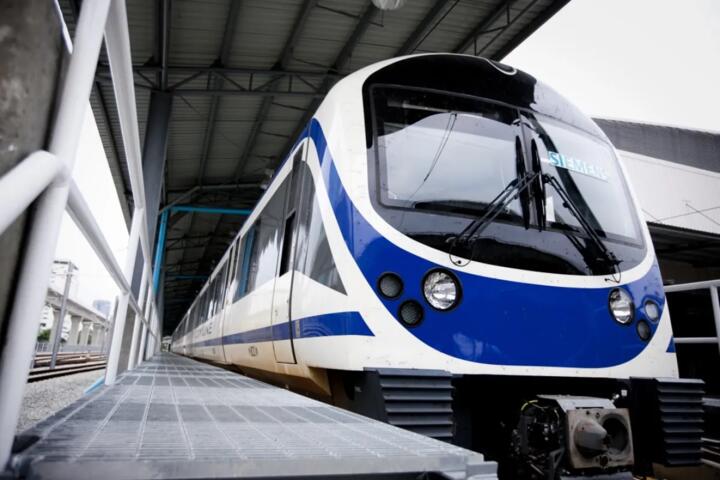
Bangkok Airport Rail Basics
The Airport Rail Link (ARL) connects Suvarnabhumi Airport with central Bangkok via Phaya Thai. It runs on a dedicated rail line, so travel time depends mostly on train stopping patterns and the time spent at stations rather than traffic conditions. For many travelers, the practical question becomes: which station pair matches your hotel area, and how much buffer you need for boarding and transfers.
Most riders start at Suvarnabhumi Airport Station and end at Phaya Thai Station, then walk or transfer to the BTS Skytrain. The line also serves intermediate stations, so the “fastest” trip can change if you ride past your intended stop. If you’re traveling with luggage, station layout matters: escalators and elevators can reduce friction, but they also create bottlenecks during peak arrival waves.
Fares and schedules can change, and the ARL is managed by a specific operator under Thai rail regulations. Before you go, check the latest posted fare board at stations or the operator’s official channels, because online listings sometimes lag behind. On a personal aside: I’ve seen travelers arrive with screenshots from older fare pages, then discover the ticket office uses the current tariff posted that day.
Common Fare And Time Pitfalls
People often underestimate how fare and time planning interact. A ticket price may look fixed for a route, but the total cost can rise if you miss your stop and re-enter the system, or if you buy the wrong ticket type at the station counter. Travel time planning also fails when riders assume “rail time” equals “door-to-door time,” ignoring the walk from terminals to the station entrance and the time to clear station access.
Another frequent issue involves station selection. ARL has intermediate stops between Suvarnabhumi and Phaya Thai, so riding to the wrong station can add minutes and force a second local transfer. People also mix up ARL with other Bangkok rail lines; BTS and MRT have different fare systems and transfer rules, so a single “rail pass” assumption can lead to paying twice.
Supporting technologies matter because they affect what you experience. ARL uses electronic ticketing and station gates; if your ticket barcode or card is not accepted, you may need staff assistance. Real-time train information displays can be delayed during disruptions, and announcements may be brief—use the platform signage and the posted timetable as your baseline, then treat live updates as a secondary signal.
Finally, delays are not rare around major flight banks. Even with a dedicated line, trains can slow for operational reasons, and station dwell time can increase when many passengers board at once. That’s why a “typical” travel time should be treated as a planning estimate, not a promise.
How To Plan Fares And Times
Check Current Tariffs Before Travel
Start with the latest ARL fare posted at the station or on the operator’s official website and social channels. Ticket pricing is distance- and route-based, so the fare for Suvarnabhumi to Phaya Thai can differ from fares to intermediate stations. If you’re using a third-party map app, treat its fare estimate as a rough guide, because it may not reflect the current tariff.
Practical method: arrive early enough to buy a ticket without rushing. At the station, look for the fare board near the ticketing area and confirm the route you need. On a small aside, I once watched a traveler argue with a kiosk because the screen language defaulted to Thai; the quickest fix was switching the kiosk language and selecting the correct destination pair.
Use Timetables With Buffer Time
Plan around the published schedule and add buffer for station access, walking, and platform boarding. A typical ARL trip between Suvarnabhumi and Phaya Thai is often planned in the range of about 30–40 minutes for rail time, but actual door-to-door time can be longer depending on your terminal location and transfer speed. During peak periods, dwell time at stations can stretch, so adding 15–25 minutes reduces stress.
To estimate your total time, break it into segments: (1) walk from your terminal to the station entrance, (2) ticket purchase or gate entry, (3) platform wait, (4) train ride, and (5) exit and transfer to BTS or your hotel pickup. This method works even when you don’t know the exact train you’ll board, because you’re planning for the range of likely delays.
Match Your Stop To Your Hotel Area
Choose the station that minimizes transfers. Many hotels near BTS lines pair well with Phaya Thai because it connects to the BTS network. If your lodging is closer to an intermediate ARL station, you may save time by exiting there and using local transit, but you must check the walking distance and the availability of sidewalks or covered routes.
Realistic outcome: for travelers who land with luggage and want predictable movement, the Suvarnabhumi-to-Phaya Thai pairing often reduces decision points. For travelers who already plan to use MRT or bus routes, an intermediate exit can reduce backtracking, but it depends on your exact address and the last-mile route.
Account For Disruptions And Gate Issues
Build a plan for the two most common disruptions: train delays and ticketing problems. If a train is delayed, station staff usually post updates, but the display can lag; use the platform announcements and the timetable board together. If a gate rejects your ticket, go to the staffed counter rather than forcing repeated attempts, since repeated scans can slow you down.
For travelers with mobility needs, check whether elevators are operating before you rely on them. Station elevators can be out of service during maintenance windows, and the alternative route may be longer. A mild frustration many riders experience: the “shortest route” on a map app can ignore elevator access and lead to stairs.
Educational Case Examples
Family With Two Luggage Sets
An anonymized family arrives at Suvarnabhumi at 18:30 and plans to reach a hotel near BTS. They check the ARL fare board at the station entrance, buy tickets for the Suvarnabhumi-to-Phaya Thai route, and add a 20-minute buffer for gate entry and platform waiting. Their rail time estimate stays within the typical 30–40 minute range, but their door-to-door time becomes closer to 60 minutes because they wait for a BTS connection after exiting at Phaya Thai.
They avoid a common mistake by not riding past Phaya Thai “just in case,” since re-entering and transferring adds time and can create confusion with luggage handling at intermediate stations.
Solo Traveler Near An Intermediate Stop
An anonymized solo traveler stays near an area served by an intermediate ARL station and wants to reduce walking. They compare two options: ride to Phaya Thai and transfer to BTS, or exit at the intermediate station and use a short local route. They choose the intermediate exit after checking the station-to-hotel walking path on the day of travel, then confirm the fare for that specific station pair at the ticketing area.
Their plan succeeds because they treat “rail time” as only one segment and verify the last-mile route, which is where most time variation occurs.
Fare And Time Planning Checklist
| Decision Point | What To Check | Why It Changes Your Plan | Practical Tip |
|---|---|---|---|
| Route | Which stations you ride between | Fare depends on the station pair | Confirm the destination on the fare board before paying |
| Schedule | Published departure times and frequency | Platform wait can dominate total time | Add 10–20 minutes for waiting at busy hours |
| Last Mile | Transfer to BTS/MRT or walking route | Door-to-door time varies more than rail time | Check elevator access if you have mobility needs |
| Disruptions | Delay notices and gate behavior | Operational issues can extend dwell time | Use posted timetable + announcements, not only one source |
Step-by-step checklist for your day: (1) confirm your station pair, (2) check the current fare board, (3) pick a departure window with buffer, (4) plan your transfer route from the exit station, and (5) keep a fallback option if the next train is delayed.
Common Mistakes To Avoid
Buying a ticket for the wrong destination pair is the most avoidable problem. Station staff can correct it, but the extra time can cascade into missed connections. Another mistake is relying on a single travel-time number from an old blog post; rail time estimates can shift with timetable changes and operational patterns.
Some travelers also confuse ARL with other Bangkok rail systems and assume a single fare covers transfers. BTS and MRT use separate ticketing rules, so you should plan to pay for each system you ride. If you plan to use a rideshare or taxi after the station, check the pickup point and walking path, since “closest” on maps can differ from the actual exit route.
Finally, people sometimes ignore station access time. In busy periods, the time to reach the platform can be longer than expected because of gate queues. A mild frustration: the fastest route on a navigation app can route you through a stair-only corridor, which becomes a problem with luggage.
FAQ
What Is The Airport Link Fare?
The Airport Rail Link fare depends on the station pair you travel between. Check the current fare board at the station or the operator’s official channels before you buy, since tariffs can change.
How Long Does The Ride Take?
Rail time between Suvarnabhumi Airport and Phaya Thai is often planned around 30–40 minutes, but total time varies with platform waiting, station access, and transfers to BTS or local transport.
Do I Need A Separate Ticket For BTS?
Yes. BTS uses its own fare system and ticketing rules, so you should plan for a separate purchase or stored-value card for the BTS segment.
Where Do I Buy Tickets At The Airport?
Tickets are typically available at the Airport Rail Link station area inside Suvarnabhumi. Use the posted fare board near ticketing points and confirm the destination station before paying.
What If A Train Is Delayed?
Use station announcements and the timetable board as your primary sources, then adjust your transfer plan. If ticketing or gate access fails, go to staffed counters rather than repeating scans.
Author's Insight
Airport Rail Link planning works best when you treat rail time as one segment of a longer route. Fares depend on the station pair, so travelers should confirm the current tariff at the station rather than rely on cached online screenshots. Timetables and real-time displays can diverge during disruptions, so a buffer for waiting and last-mile movement reduces the chance of missed connections. On a small aside, I often test route assumptions using Google Maps (version noted in my browser as 2026-08) and then verify station access details on the ground, since elevator access and walking paths can differ from map labels.
Key Takeaways
- Confirm the ARL fare for your exact station pair at the station or official sources before paying.
- Plan for door-to-door time: platform waiting and transfers often add more time than the train ride itself.
- Choose your exit station based on your hotel’s last-mile route, not only on the fastest rail segment.
- Use station announcements plus posted timetables during delays, and keep a buffer for gate queues.