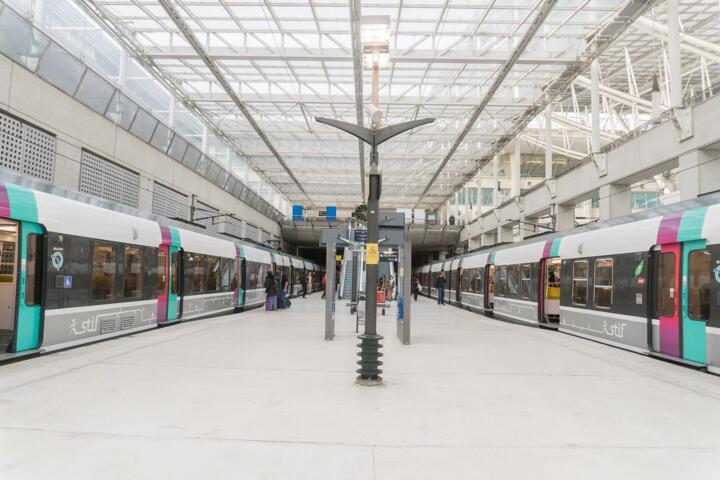
Paris Airport Transfer Options
Paris airport transfers usually revolve around three systems: the RER regional rail network, taxis, and the Metro for local movement. The right choice depends on which airport you land at (Charles de Gaulle or Orly), your destination neighborhood, the time of day, and how much luggage you carry.
RER trains are designed for airport-to-city travel and connect to major hubs like Châtelet–Les Halles and Gare du Nord. Taxi rides trade predictable door-to-door convenience for higher cost and traffic variability. The Metro can work well for the last segment once you reach a rail hub, but it rarely serves airports directly.
For example, a traveler heading to central Paris with one suitcase often finds RER simpler than Metro transfers. A traveler with multiple bags or mobility needs may prefer a taxi for fewer steps, even when the fare is higher. A traveler staying near a Metro line might use RER to reach the right station, then switch to Metro for the final approach.
Common Mistakes And Dependencies
People often underestimate how much airport transfers depend on station choice, walking distances, and transfer timing. A route that looks short on a map can involve multiple corridors, ticket gates, and platform changes that add 10–25 minutes in practice, especially when crowds surge.
Another frequent issue is mixing up which rail lines serve which airport. Charles de Gaulle has strong RER connections, while Orly relies more on Orlyval and tram links before you reach the RER or Metro network. If you plan only around “Metro access,” you can end up with an extra transfer you did not budget for.
Ticketing also matters. RER and Metro use different fare products depending on where you enter the network and which zones you cross. If you buy the wrong ticket type, you may face gate delays or need to purchase again at the station, which is annoying when you’re tired after a flight.
Traffic is the dependency that most affects taxis. Even with a fixed starting point, travel time can swing widely during rush hours. On a rainy evening, the ride may feel longer than the distance suggests, and the driver may take a route that changes your arrival time without changing the fare structure.
Finally, travelers sometimes ignore the “last 500 meters” problem. From any station, you still need to walk to your hotel, and that walk can be the difference between a calm arrival and a sprint with luggage. The RER and Metro can be fast, but the station-to-hotel segment is where many plans break.
RER, Taxi, Or Metro: How To Choose
Start with the airport and your destination area, then match the transport mode to your tolerance for transfers. RER is usually the best fit for airport-to-central-city movement with fewer steps. Taxi fits when you want door-to-door travel and can accept cost and traffic variation. Metro fits when you already have a rail hub connection and your hotel is close to a station.
To make the decision concrete, plan around three numbers: total travel time, number of transfers, and walking distance from the station. If you can keep transfers to one and walking under about 10 minutes, RER often feels easier than Metro. If you need to move several bags or travel with a stroller, taxi can reduce friction even when the ride takes longer than expected.
One small planning detail that helps: check station accessibility before you commit. Some stations have elevators and step-free routes, while others require stairs. I’ve seen travelers arrive with a plan that worked on paper but failed because the station entrance they used had no lift access, and the detour added time.
Plan With RER Routes And Timing
Use RER when your destination is near a major RER stop or a short Metro ride from one. For Charles de Gaulle, the RER B connection is a common choice for central Paris, while RER A and other lines can work depending on your final neighborhood. For Orly, you typically need a different approach than “RER straight in,” since you often connect via tram or shuttle links before reaching the RER or Metro network.
Practical method: pick your destination station first, then work backward to the airport connection. Many hotels list the nearest station, which reduces guesswork. A route planner can show platform changes, but it rarely captures corridor crowding; add a buffer of 10–20 minutes for transfers during peak hours.
Tools and checks: verify whether your chosen RER service is an express or stopping pattern. On some routes, express services reduce travel time but still require the same transfer discipline. If you’re traveling with luggage, look for stations with elevators and wide gates; in my experience, the station signage can be clearer when you’re using the latest version of a route app (I last checked a route planner UI on 2026-06, and the station entrance labels were more specific than older screens).
Use Taxis For Door-To-Door Comfort
Choose a taxi when you want minimal walking and fewer transfers. Taxis are also a practical option when you arrive late at night and want to avoid station navigation. The trade-off is cost and time variability due to traffic.
Before you board, confirm the pickup point and the fare basis. Paris taxis typically use a regulated meter system, and the final fare can include surcharges depending on the time and route. If you’re comparing options, compare total expected cost and arrival time, not just the meter start.
Realistic outcome ranges: a taxi from an airport to central Paris can take anywhere from roughly 45 minutes to well over 90 minutes depending on traffic, and the fare can be meaningfully higher than rail. If you’re arriving during rush hour, plan for the longer end of the range and keep a small buffer for delays at the pickup queue.
Small aside: taxi pickup lines at large airports can move slowly even when the road traffic is light. On one trip planning session (I checked queue descriptions in a transport forum thread dated 2024-11), the biggest delay was not the drive but the time spent reaching the correct taxi stand.
Use Metro For The Final Leg
Use the Metro after you reach a rail hub with RER access. Metro lines are dense in central Paris, and they can bring you close to many hotels. The limitation is that the Metro does not usually serve airports directly, so you must account for the airport-to-hub segment first.
Practical method: choose a hub station where you can transfer with minimal walking. Then check the hotel’s nearest Metro station and the direction of travel. Metro transfers can be fast when platforms are close, but they can also involve long corridors and multiple staircases.
Realistic outcome ranges: once you’re in central Paris, Metro rides often take 15–35 minutes depending on the number of stops. The time cost is usually the transfer and walking, not the ride itself. If you have heavy luggage, prioritize stations with step-free access and avoid routes that require multiple stair climbs.
Educational Case Examples
Scenario 1: A traveler lands at Charles de Gaulle and stays near Châtelet. They carry one checked suitcase and one small backpack. Planning around RER B to Châtelet–Les Halles reduces transfers, and the station-to-hotel walk is about 8 minutes. They add a 15-minute buffer for platform crowding and arrive without needing a taxi.
Scenario 2: A family arrives at Orly with two large suitcases and a stroller. They prefer fewer steps and want to avoid multiple rail transfers. They choose a taxi for door-to-door travel, accepting that the ride time may extend during evening traffic. When they reach the hotel, the reduced walking and fewer transfers outweigh the higher cost.
RER Vs Taxi Vs Metro Checklist
| Decision Factor | RER | Taxi | Metro |
|---|---|---|---|
| Best Use | Airport-to-hub travel | Door-to-door with luggage | Last-mile within central Paris |
| Transfers | Often 0–1 | Usually 0 | Often 0–2 |
| Time Variability | Moderate (crowds, connections) | High (traffic, queues) | Moderate (service frequency) |
| Luggage Fit | Good if station access is step-free | Very good | Mixed (stairs at some stations) |
| Cost Pattern | Lower than taxi | Higher, meter-based | Lower than taxi |
- Write down your hotel’s nearest station name and check whether it has step-free access.
- Pick the airport first, then choose the mode that matches that airport’s rail connections.
- Budget 10–20 minutes for transfers and walking, then add 15 minutes if you arrive during peak crowding.
- If you carry heavy luggage, prioritize fewer transfers over the lowest fare.
- For taxis, plan for traffic and pickup queue time; for rail, plan for platform crowding and gate lines.
Common Mistakes To Avoid
Buying a ticket without checking whether it covers the airport-to-city segment can cause delays at gates. In Paris, fare products depend on zones and the route you take, so a “Metro-only” ticket can fail when you enter an RER line.
Another mistake is assuming that the shortest route on a map equals the fastest arrival. Corridors, station exits, and transfer walking often dominate the experience. If you’re traveling with luggage, choose routes with fewer station changes even when the ride time looks slightly longer.
Travelers also underestimate how often station entrances change. Construction, temporary closures, and crowd management can redirect you to a different entrance, which can add walking time. Checking the station entrance details in a route planner or transit app can reduce that risk.
Finally, people sometimes rely on a taxi pickup point that is not the official stand. Airports can have multiple pickup zones, and using the wrong one can lead to waiting or re-routing. A quick check of the airport’s signage for taxi stands helps avoid that kind of avoidable delay.
FAQ
Which Paris airport has RER access?
Charles de Gaulle has direct RER connections to central Paris via RER B. Orly typically requires a different connection approach before you reach the RER or Metro network.
How do I plan an RER route with luggage?
Start from your hotel’s nearest station, then choose the airport connection that minimizes transfers. Add time for walking between platforms and check whether the station has step-free access if you need elevators.
Are taxi fares fixed from airports?
Paris taxis generally use a regulated meter with possible surcharges depending on time and route. The final amount varies with traffic and the chosen path, so compare expected total cost rather than only the meter start.
Can the Metro replace RER for airport travel?
The Metro can work for the last leg once you reach a central rail hub, but it does not usually serve airports directly. Most travelers need an airport-to-hub segment first.
What time buffers should I add?
For rail, add 10–20 minutes for transfers and walking, and more during peak crowding. For taxis, add time for pickup queues and traffic, especially during rush hours.
Author's Insight
Paris airport transfers are less about “which mode is faster” and more about how each mode handles transfers, walking, and crowding. RER tends to reduce the number of steps between the airport and central hubs, while taxis reduce steps at the cost of traffic variability. Metro works best after you reach a hub station, because it excels at dense central coverage rather than airport access.
When planning, treat station access and transfer corridors as real parts of the journey. A route that looks efficient on a screen can become slow when you hit stairs, long corridors, or gate lines.
If you want a practical next step, build two plans: a rail plan with a buffer and a taxi fallback for late arrivals or heavy luggage days. That approach reduces stress without relying on guesswork.
Key Takeaways
- RER fits airport-to-central travel with fewer transfers, especially from Charles de Gaulle.
- Taxi fits door-to-door comfort and luggage handling, with higher cost and traffic-driven time swings.
- Metro fits the final leg inside central Paris after you reach a rail hub.
- Plan around walking distance, station accessibility, and transfer time, not just the ride duration.